
Saturday, April 30, 2016

John Wesley Hyatt's - Invention of Plastic he called celluloid

John Wesley Hyatt (November 28, 1837 – May 10, 1920) was an American inventor. He is mainly known for simplifying the production of celluloid, the first industrial plastic. Hyatt, a Perkin Medal recipient, is an inductee into the National Inventors Hall of Fame.
Biography
Hyatt was born in Starkey, New York, and began working as a printer when he was 16. Later, he became an inventor, receiving several hundred patents. Aided by his brother Isaiah, he experimented with Parkesine, a hardened form of nitrocellulose, while researching a substitute for ivory to produce billiard balls. Parkesine had been invented by the English Alexander Parkes in 1862, and is considered the first true plastic, although it was not a success as a commercial or industrial product. Liquid nitrocellulose, or collodion, had been used as early as 1851 by another English inventor, Frederick Scott Archer, in photographic applications; it had also been used extensively as a quick-drying film to protect the fingertips of printers. Hyatt's eventual result was a commercially viable way of producing solid, stable nitrocellulose, which he patented in the United States in 1869 as "Celluloid" (US patent 50359; now a genericized trademark). In 1870 Hyatt formed the Albany Dental Plate Company to produce, among other things, billiard balls, false teeth, and piano keys,[1] Hyatt’s Celluloid Manufacturing Company was established in Albany, New York in 1872 and moved to Newark, New Jersey in 1873.
In parallel, a third English inventor, Daniel Spill, had independently developed essentially the same product, which he patented in the UK as "Xylonite". Spill later pursued Hyatt in a number of costly court cases between 1877 and 1884. The eventual decision was that the true inventor of celluloid was Parkes, but that all manufacturing of celluloid could continue, including Hyatt's.
Hyatt's other patented inventions include the first injection moulding machine, roller bearings and a multiple-stitch sewing machine. John Wesley Hyatt founded the Hyatt Roller Bearing Company in 1892 in Harrison, New Jersey. In 1895 he hired Alfred P. Sloan, son of a major investor in the company, as a draftsman. In 1905 he made Sloan president. The company was sold to General Motors in 1916, and Sloan went on to become president of GM.
In the mid-1880s the billiard industry, worried about the decline of the ivory supply, offered $10,000 to the individual(s) who could make a better billiard ball. In 1869 John Wesley Hyatt submitted a patent for a billiard ball made from nitrocellulose, a compound he would later call celluloid. It is not clear whether Hyatt ever received the prize money, but a year later he had started an extremely successful company producing billiard balls, false teeth, piano keys, and other products from celluloid.
Celluloid is the name given to a group of compounds that are composed of nitrocellulose and camphor. Regarded as the first thermoplastic, celluloid was originally developed by Alexander Parkes in 1855, but it was not until the late 1860s, when John and Isaiah Hyatt began investigating the material as a replacement for ivory billiard balls, that celluloid became a commercial success. Celluloid was strong and easily moldable, which made it an easy replacement for such materials as ivory and wood. Celluloid was used in everything from billiard balls and other toys to cuffs and collars for shirts.
Wednesday, April 27, 2016
Saturday, April 16, 2016
Nick Dakota

This year, Nick was fortunate to have Robyn Robins (of Bob Seger and The Silver Bullet Band) produce his current album. Robyn believes highly in the talents of Nick and the future of his music career. “We feel Nick has great potential. The songs, vocal delivery and overall production are great”, quotes Robyn.
This album definitely defines the meaning of top quality production.. The fidelity speaks for itself. The album was recorded with some of the best players in Nashville including Lee Hendricks (Eric Church’s bass player), Steve Hinson(steel guitar for Randy Travis) and Troy Lancaster (Tim McGraw’s guitar player).
The goal of the project was to create a multi genre, listener friendly album, with lyrics and musical content ringing true to any listener. This first single, “How Cool is That”, achieved that goal with the help of hit songwriters, L. Hengber and S. Williams.
Nick is now spending alot of time in his personal studio in Saugituck,MI writing and preparing for his next album due to begin in March 2015. To stay sharp, he also plays the occasional showcase to keep his live chops up for touring.
Nick says, “singing and playing has stuck with me to that point in your life when it’s time to decide a career”. Nick is sticking with his vision and following his dream
Friday, April 8, 2016
THE FAITHFUL
THE FAITHFUL

MARK DIGENNARO- SONGWRITER/SINGER/DRUMMER/KEYBOARD PLAYER. HE HAS CREATED THE ARTWORK BEHIND ALL THE ALBUMS BY THE FAITHFUL. HIS SONGWRITING IMAGINATIVE ABILITY IS CREATIVE THROUGH INSPIRATION FROM THE SPIRIT. HIS DRUMMING AND PERCUSSIONS IS HEARTPOUNDING THUNDER. HIS MELODY KEYBOARD ARRANGMENTS ARE WHAT MAKES THE FAITHFUL'S MUSIC SO UNIQUE AND DIFFERENT.
MICHELLE"MAGICA"CANBULDU- SINGER/SONGWRITER/ACOUSTIC GUITAR PLAYER. HER RANGE OF VOICE CAN GO FROM SOUL - POP- R&B - ROCK- DISCO- OPERA ETC... HER SONGWRITING ABILITY MAKES THE MAGIC IN MAGICA COME OUT LIVE IN THE MUSIC! HER IMAGINATION IN CREATING SOUNDS LIKE WE BELIEVE & THE HUNGER FAR EXCEED THE NORM of MUSIC!
JAMIE BROWN by The Faithful Press Release on FEB 1 , 2016
JAMIE BROWN IS A SONG WRITTEN ABOUT A JAMACIAN
WOMAN NAMED JAMIE BROWN. ONCE ASKED IF SHE
BELIEVED IN THE RAINBOW PROMISE-HER REPLY WAS
"YES I DO"
Thursday, March 17, 2016
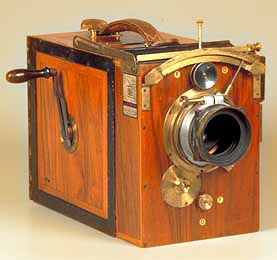
Lumiere Brothers in 1895 shrink the camera - The Birth of a Nation and Black Protest- and the Birth of Black Films thanks to Sears with the first motion picture package



Art [and History] by Lightning Flash”: The Birth of a Nation and Black Protest
 Still image from "Birth of a Nation" Film
 Still image from "Birth of a Nation" Film
The racism that African Americans experienced in both the South and the North during the war years could be glimpsed in many arenas of American life, including the movies. It is not surprising, perhaps, that The Birth of a Nation, which appeared in March 1915, was both one of the landmarks in the history of American cinema and a landmark in American racism.
Historian Thomas Cripps has characterized The Birth of a Nation as “at once a major stride for cinema and a sacrifice of black humanity to the cause of racism.” Based on two historical novels, The Clansman, An Historical Romance of the Ku Klux Klan (1905) and The Leopard’s Spots: A Romance of the White Man’s Burden, 18651900 (1902), and a play, The Clansman (1906), written by a North Carolina lawyer turned preacher, Thomas Dixon Jr., The Birth of a Nation recounts the history of the Civil War and Reconstruction through the eyes and experiences of Southern whites who vehemently opposed the political and social progress made by newly freed African Americans after the Civil War.
Much of the novel’s tone, which Cripps describes as “a nightmare of interracial brutality, rape and castigation,” found its way into The Birth of a Nation.
Dixon had committed his entire writing career to arguing in favor of the racial superiority of whites and the Ku Klux Klan’s use of violence to redeem the “Lost Cause” of the Confederate South. Angered by a 1901 staging of Harriet Beecher Stowe’s classic Uncle Tom’s Cabin, which depicted African Americans in a positive light, Dixon decided to produce a play that offered his own interpretation of race relations in the South. Dixon’s description of what he hoped to accomplish with his stage adaptation of The Clansmancould well serve as the justification for the film that would appear almost a decade later:
My object is to teach the North, the young North, what it has never known-the awful suffering of the white man during the dreadful Reconstruction period.
I believe that Almighty God anointed the white men of the South by their suffering during that time . . . to demonstrate to the world that the white man must and shall be supreme. D. W. Griffith—arguably the most talented and successful Hollywood director of the silent film era—cowrote, produced, directed, coedited, and coscored The Birth of a Nationwith a budget and cast unprecedented in early silent films. The Birth of a Nation’s epic scale and its pathbreaking editing and cinematic techniques made it an instant film classic, praised by such cultural figures as the poet Vachel Lindsay, who described The Birth of a Nation as “art by lightning flash.” The film’s melodramatic plot revolves around the intertwined fates of a southern and northern family before and after the Civil War. It openly depicts southern blacks as vicious and lascivious, their northern white allies as cunning, unscrupulous, and arrogant, and the film’s southern whites as suffering repeated political and sexual indignities at the hands of white northerners and black southerners before literally being rescued by the gallant, hooded riders of the Ku Klux Klan.
 D. W. Griffith—arguably the most talented and successful Hollywood director of the silent film era—cowrote, produced, directed, coedited, and coscored The Birth of a Nationwith a budget and cast unprecedented in early silent films. The Birth of a Nation’s epic scale and its pathbreaking editing and cinematic techniques made it an instant film classic, praised by such cultural figures as the poet Vachel Lindsay, who described The Birth of a Nation as “art by lightning flash.” The film’s melodramatic plot revolves around the intertwined fates of a southern and northern family before and after the Civil War. It openly depicts southern blacks as vicious and lascivious, their northern white allies as cunning, unscrupulous, and arrogant, and the film’s southern whites as suffering repeated political and sexual indignities at the hands of white northerners and black southerners before literally being rescued by the gallant, hooded riders of the Ku Klux Klan.
A selection from historian Thomas Cripps’s Slow Fade to Black: The Negro in American Film, 1900-1942 offers a scene-by-scene breakdown of The Birth of a Nation as African-American filmgoers might have viewed the film in 1915.
Four key scenes from A Birth of a Nation convey the film’s powerful artistry, historical distortions, and racist sensibilities:
1. A series of intertitles (text on the screen), drawn from A History of the American People, published originally in 1902 by Woodrow Wilson, who in 1915 just happened to be president of the United States; Wilson’s prose introduces the Reconstruction section of the film, making the rise of the Ku Klux Klan a positive good that resulted in the redemption of the white South from the ravages of Negro and Carpetbagger rule.
2. A scene set in the South Carolina legislature in the early 1870s (introduced with an intertitle that suggests that what is to follow is drawn from “historic incidents”), which depicts newly elected black legislators lolling in their chairs, their feet bare, eating chicken and drinking whiskey, leering at white women in the visitors’ gallery.
3. A scene in which one of the film’s white southern heroes witnesses a group of white children donning white bedsheets, inadvertently scaring several black children playing nearby, which provides him with “The Inspiration” for the Klan’s infamous outfits.
4. A scene of Klansmen, dressed in white sheets and astride horses, dumping the body of the character Gus, an African American who they had killed for causing Flora, the little sister of the story’s southern white protagonists, to hurl herself off a cliff.
Because widespread black protests had greeted the staging of Thomas Dixon’s The Clansman nine years earlier, both Griffith and Dixon decided to drum up support among prominent Americans for The Birth of a Nation in anticipation of the storm of criticism that would surely follow the film’s release. Dixon managed even to wangle an interview with President Woodrow Wilson; he screened The Birth of a Nation for the president on February 18, 1915 (the first film, in fact, ever to be screened in the White House). The film’s power and message reportedly overwhelmed Wilson, no doubt in part because his own scholarly writings figured so centrally in the film’s historical interpretation.
Even as Griffith completed The Birth of a Nation in Hollywood, black leaders began laying plans for a nationwide protest campaign. In the week prior to President Wilson’s screening of the film in the White House, the Los Angeles branch of the National Association for the Advancement of Colored People (NAACP), after a series of unsuccessful attempts to have local authorities censor the film, called for The Birth of a Nation to be banned in Los Angeles. Founded only six years earlier by a coalition of black and white political leaders and intellectuals, the NAACP was the nation’s most important and powerful organization devoted to protecting African-American rights and interests and achieving black equality and economic opportunity.
In March, the NAACP’s protests shifted to New York City, where the film’s producers planned a huge opening on March 3, 1915, at the Liberty Theater near Times Square. Using advance ticket sales, reserved seating, huge Times Square billboards of Klan nightriders, special trains to transport white movie patrons from Connecticut and New Jersey, and horsemen dressed in Klan regalia riding through city streets, the producers managed to attract thousands of New Yorkers in the first few weeks after the film opened. Despite daily picket lines outside the Liberty Theater, The Birth of a Nation quickly became the most successful film ever shown in New York City during the silent film era.
Ten days after the film opened in New York City, noted reformer and NAACP board member Jane Addams (founder of Hull House, the Chicago settlement house) participated in a critical interview about The Birth of a Nation that appeared in the New York Post.
Though Addams’s review abhors what she calls the film’s “pernicious caricature of the [N]egro race,” she nonetheless concedes—perhaps intimidated by Griffith’s unrelenting efforts to cloak the film in the mantle of historical “accuracy”—that “some of the elements of the plot are based on actual events,” which suggests how the pro-southern interpretation of Reconstruction had permeated popular understanding of that history.
Director D. W. Griffith responded vigorously to the NAACP’s criticisms and Addams’s critical review, releasing an annotated guide to the film that drew heavily on the work of contemporary academic historians like Columbia University’s William Dunning, whose Reconstruction scholarship included racist depictions of African Americans and uncritical sympathy for the cause of the white South.
When the proposed boycott of The Birth of a Nation failed to stir significant white opposition to the film in Los Angeles and New York City, the NAACP changed its tactics, arguing instead that the film’s most egregiously racist scenes must be excised from release prints.
An April 17, 1915, letter from NAACP national secretary Mary Childs Nerney describes the NAACP’s efforts, largely in vain, to get local film censors to remove particularly racist scenes from The Birth of a Nation. The NAACP’s ongoing national campaign to censor the film had decidedly mixed results. Despite successes in Boston and Chicago in getting sympathetic officials placed on newly formed film censorship boards, by year’s end distributors could show The Birth of a Nation almost anywhere in the country (the exceptions included Kansas), though with several minor cuts in the film’s release print.
Over the next twenty years The Birth of a Nation went on to become one of the most admired and profitable films ever produced by Hollywood, replaced finally after 1940 by Gone with the Wind, another film about the Civil War and Reconstruction era based on a novel by a southerner that told the story of gallant southern cavaliers and their ladies and the “Lost Cause” of the Confederate South.
For more reading on The Birth of a Nation and the black protest movement it engendered, see Thomas Cripps,Slow Fade to Black: The Negro in American Film, 19001942 (1977); Robert Sklar, Movie Made America: A Cultural History of American Movies (1975); Michael Rogin, “‘The Sword Became a Flashing Vision’: D.W. Griffith’s The Birth of a Nation” in Robert Lang, ed., The Birth of a Nation (1994), 250-93.
The story of one of the patent: the Evolution of cameras from the lumière brothers to the present day
The story of one of the patent: the Evolution of cameras from the lumière brothers to the present day
In the distant 1895 the lumière brothers probably had no idea how to change the world with their patent. Video action camera, “slow-mo”, cinema, Oscar, Berlinale, poor Leonardo Di Caprio and lucky Walt Disney - here are just a small list of the merits of the invention.

Revision Droider loves not only watch videos, but also to shoot, so with a light hand predstavljaet evolution camcorder - from the very Louis Jean and Auguste Louis Marie Nicolas lumière to the present day.
January 6, 1896 brothers was presented to the famous black-and-white documentary short film, which became one of the first films in history. Of course, we are talking about the “Arrival of a train at the station of La Ciotat, the timing lasted less than 1 minute. The film for the first time in the history of cinema has screened the movement in the future - moving trains created the effect of space. In addition, for the first time one frame have been shown people total, medium, and large plans.
Few people know that during the premiere of the many spectators who sat in the audience were shocked by what they saw. They thought that moving train now rammed the screen will enter the auditorium. So a paradox was based on the era of Charlie Chaplin silent film.
Gods succeeded each other and rough on manual power, a huge chamber was modified following the progress, but the mechanics of the invention lumière been used for several decades in a row. The situation began to change only in the 80's, when the light began to appear the first analog video.

It happened on 11 may 1980 - that's when the market went legendary camcorder from Sony, to be more precise experimental model. Of course, the image quality left much to be desired, but it was a coup. Since the equipment was not only much smaller but also allows you to shoot in color.
A Real war for the consumer begins in 1985, when the Japanese company produces the analog video standard Video 8, and JVC introduces the format VHS-C compact VHS version. Recording device and camera were now inseparable. It appeared from the camcorder-the camcorder.

Despite the quality of the image, in the late 80's and early 90-ies of the camera swept from the shelves of stores equipment. Such a consumer boom partly influenced by the popular TV shows like "Himself, the Director" and "Best home video, where it was demonstrated funny Amateur videos.
In 1995, there were a new milestone in the history: the first digital camera format miniDV Sony DCR-VX1000. Its price was much more expensive than analog, but for the image quality it was not equal.
In 2001, Japanese engineers have done the seemingly impossible: all information was recorded not in a bulky tapes, and flash drives, which greatly simplified the use of the camera as a home, and in the process of professional photography.

In 2002, the world appeared Sanyo SCP-5300 is the first phone with an integrated camera. Despite the fact that the image was a bit disgusting quality, he was a newcomer, putting further development of technology.
Perhaps in the future we are waiting for a new revolution. The camera has already penetrated into smartphones, computers, tablets, media players and continue to integrate into other types of household appliances.
In 1895 humanity has experienced several formats and variations of video, film firmly settled in the human consciousness, and Oscar has become such an important event in the life of the individual, as the New year or birthday. One patent has changed the perception of the world, as if this pathetic sounds, many thanks should be said to the brothers lumière.
Subscribe to:
Posts (Atom)